
 2026 · 36 episodes
DramaQ
125 dramas and 63 films from Taiwan and mainland China, 2000 to 2026, with 3,599 episodes listed.
《Latest on DramaQ》
2026 · 36 episodes 2025 · 32 episodes
 2025 · 28 episodes
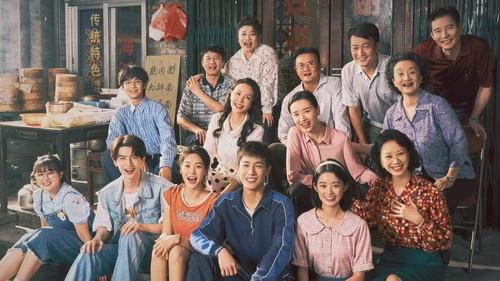 2025 · 33 episodes
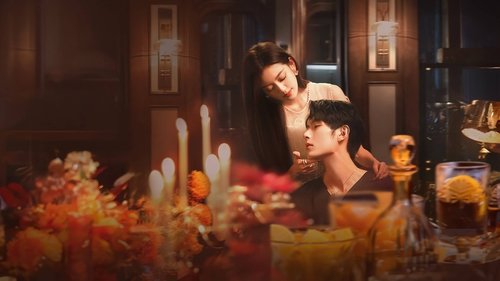 2025 · 56 episodes
 2025 · 22 episodes
《Idol dramas》
 2013 · 39 episodes
 2007 · 13 episodes
 2009 · 14 episodes
 2011 · 15 episodes
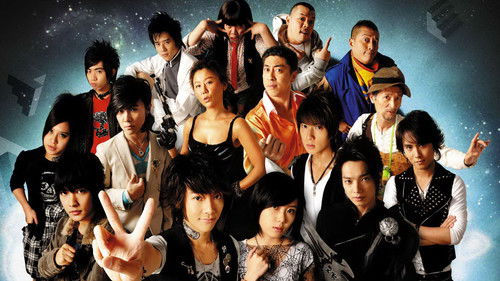 2007 · 55 episodes
 2007 · 15 episodes
《Taiwanese dramas》
 2019 · 20 episodes
 2017 · 16 episodes
 2021 · 26 episodes
 2016 · 39 episodes
 2016 · 15 episodes
 2020 · 15 episodes
《Mainland dramas》
 2024 · 23 episodes
 2022 · 24 episodes
 2018 · 30 episodes
 2022 · 18 episodes
 2018 · 24 episodes
 2021 · 32 episodes
《Films》
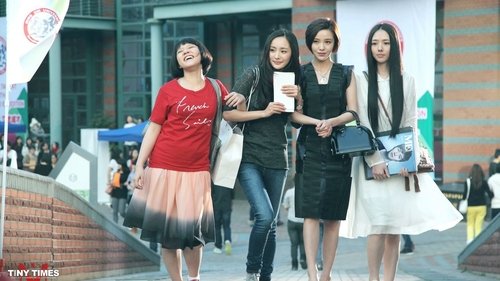 2013 · Film
 2018 · Film
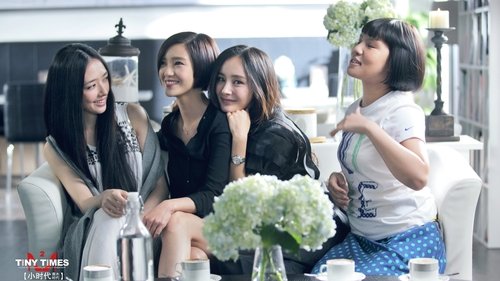 2013 · Film
 2015 · Film
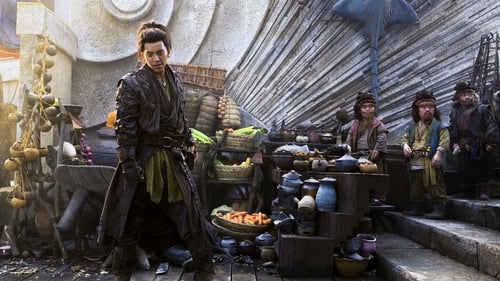 2017 · Film
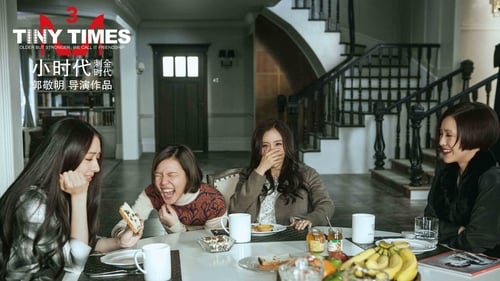 2014 · Film
The DramaQ guide to Taiwanese and Chinese drama
DramaQ: Taiwanese and Chinese dramas and films, with Just You, Hi My Sweetheart, Skip Beat!, Another Me, Tiny Times, Au Revoir Taipei and Sophie's Revenge
For a decade at the start of this century the most watched romantic dramas in the Chinese-speaking world came from a small island. Taiwanese idol dramas, bright, funny and unashamedly sentimental, travelled from Taipei to Shanghai, Singapore and Manila, and taught a generation what a television love story should look like. The mainland learned the lesson and now makes such stories in far greater numbers, for telephones as well as television sets, and its film industry has grown into the largest in Asia. DramaQ is a guide to both: 125 modern dramas and 63 films from Taiwan and mainland China, made between 2000 and 2026. Each has a page with its cast, its episodes where it has them, and a Watch now button that leads to the official services carrying it.
The 125 dramas have 3,599 episodes between them. Fifty-eight of the 188 titles were made in Taiwan and a hundred and thirty on the mainland or, in a few cases, in Hong Kong and Singapore. Everything here is set in the modern world; the palaces and swordsmen of Chinese costume drama belong elsewhere. This guide takes the Taiwanese idol dramas first, then later Taiwanese drama, then the mainland by kind, then the films, and closes with lengths, the search, My List and a plan for a first fortnight.
What DramaQ is
DramaQ is a viewing guide. Each of its 188 pages describes one title: its story, the year in which it was made, its leading actors, its director where one is recorded and, for a drama, the order of its seasons and episodes with their dates. At the top of each page is a Watch now button with a country selector beside it. Choose the country you are in, press the button, and JustWatch opens with the services that carry the title there, whether by subscription, rental, purchase or free with advertising. The how to watch page sets out the three steps in brief.
The selection was made by hand, one summary at a time, with a mixed household in mind. It favours romance, comedy, friendship, school and family stories, and it leaves aside crime dramas and plots of revenge. Taiwanese idol dramas in particular were made for the early evening and for viewers of every age, and they set the tone of the catalogue.
The guide is written in English for viewers anywhere. The dramas and films are in Mandarin, with some Taiwanese and Cantonese, and are widely available with subtitles. Each title page gives the original title in Chinese characters beside the English one, since many of these dramas are known by two or three English names and the original is the surest thing to search for.
How the pages are arranged
The site is plain on purpose. It takes its look from the simple indexes on which viewers of the 2010s kept up with their dramas: a pale grey page, a white column with thin grey rules, a black band at the top with the name and the search field, and ordinary blue links that turn green under the pointer. A strip of menu links runs beneath the band, with a green My List button at its end.
The home page has a narrow column at the left, where boxes with grey headers hold the lists, the three lengths, the four periods and the help pages, each link followed by a count in brackets. The main area is a series of sections headed in the double angle brackets that Chinese uses for titles. Each section is a ruled table three cells wide, and each cell gives a title in blue above a wide picture, with the year and the number of episodes beneath. The first section holds the six most recent titles; idol dramas, Taiwanese dramas, mainland dramas and films follow, each with a link to the whole list. On a telephone the column of boxes moves below the sections, the tables narrow to two cells, and the three-bar button opens the menu with a search field of its own.
Taiwanese idol dramas
Twenty-six dramas are Taiwanese idol dramas made between 2001 and 2014, and the idol drama guide sorts them. The term needs a word of explanation. An idol drama is a romantic series built around young and attractive stars, often pop singers, usually adapted from a Japanese comic or written in the same spirit, and aimed at viewers in their teens and twenties. The form began in Taiwan in 2001 and flourished for a dozen years. Its heroines are poor, cheerful and stubborn; its heroes are rich, proud and secretly lonely; and its plots turn on contracts, coincidences and a great deal of comic misunderstanding.
Lavender, from 2001, is one of the very first. It is a tender story about a girl with a weak heart and the boy who gives her a bottle of dried lavender before he leaves for America, and who returns years later as a pop star; it showed that the form could draw tears as well as laughter. By 2007 the idol drama was at full strength. Corner with Love pairs the singer Show Lo with Barbie Hsu as a street artist and an heiress whose parents disappear with the family fortune. Why Why Love stars Rainie Yang as a hard-pressed girl with three jobs who wins a "love coupon" in a raffle and finds that it entitles her to the attention of the least agreeable young man in the city, played by Mike He. Romantic Princess makes Angela Zhang the long-lost granddaughter of a tycoon, with four young men competing to inherit by winning her hand, and Brown Sugar Macchiato is a school comedy built around two pop groups.
Hi My Sweetheart, from 2009, is the classic of the kind and the best place to begin. Show Lo plays a rich and painfully shy student from Hong Kong who is sent to university in Hangzhou in thick glasses and a pudding-bowl haircut, and Rainie Yang the fearless campus disc jockey who takes him under her wing. They fall in love and are parted; three years later he is polished and cold and she is a struggling radio presenter, and the drama spends its second half bringing them back to who they were. Rainie Yang won the Taiwanese television academy's prize for best actress for the part, a rare honour for an idol drama.
Easy Fortune Happy Life gives Joe Chen the part of a country herbalist's granddaughter whom a dying tycoon asks his grandson to marry. MoMo Love, from a Japanese comic, has Cyndi Wang as the only girl in a family of five protective brothers. Down with Love stars Jerry Yan as a divorce lawyer of fearsome reputation who needs a nanny for his late brother's two children, and Ella Chen as the plain-spoken tomboy his secretary recommends precisely because she will be safe from his charm. P.S. Man sentences a celebrated author to community service in a home for the elderly. Drunken to Love You, with Rainie Yang and Joseph Chang, begins when two strangers, each jilted on the same day, wake to find themselves married to each other and decide to keep up appearances for three months.
The dramas of the early 2010s are more polished and a little more grown up. Skip Beat!, from a much-loved Japanese comic, stars Ivy Chen as a girl who follows her childhood sweetheart to the city, discovers that he regards her as a housekeeper, and enters show business to outshine him; Choi Si-won and Donghae of the Korean group Super Junior play the two men in her way. Just You, the most followed drama on DramaQ, is set in a small design firm whose new owner, played by Aaron Yan, bans romance in the office and moves, by an accident of property law, into the flat of the employee, played by Puff Kuo, who is most determined to overturn the ban. Miss Rose, Love Around, Fabulous Boys, a Taiwanese version of a Korean comedy about a girl who takes her twin brother's place in a boy band, and Fall In Love With Me, in which an advertising prodigy takes three months' leave under another name, belong to the same years, as does Inborn Pair, a daily serial of eighty-four episodes about a couple betrothed before they were born.
Two dramas of the period stand a little apart for their sense of time and place. In a Good Way is set in the mid-1990s, when Taiwan's universities were alive with student clubs and argument; a girl from the country who has failed her entrance examination follows her childhood friend to Taipei and finds her own way in. The Way We Were, produced by and starring Ruby Lin, follows five university friends through sixteen summers, from the earthquake of 1999 to the eve of middle age, and won the island's highest television honours. Love Myself Or You is set in a restaurant kitchen, Wayward Kenting among young people at the beach resort at the island's southern tip, with a young Eddie Peng, and The X-Family is a fantasy comedy of fifty-five episodes about a household with secret powers, starring the members of the group Fahrenheit.
Taiwanese drama since 2015
Fifty-eight titles in all were made in Taiwan, and the Taiwan guide introduces them. After 2014 the idol drama gave way to shorter, quieter series, many made for streaming. Love At Seventeen asks what a woman of thirty would do with a second chance at the summer she was seventeen. Attention, Love! is about a boy and a girl named by their fathers, two old army friends, after the parade-ground commands for standing to attention and standing at ease, and fated accordingly. Miss in Kiss retells a famous Japanese comic about a cheerful schoolgirl who moves into the house of the cleverest and coldest boy in her year. To the Dearest Intruder, Prince of Wolf, whose hero was raised in the mountains, The King of Romance, Swimming Battle, My Dear Boy, Hello Again! and Moonlight Romance continue the romantic line.
A Thousand Goodnights is the most attractive of the recent Taiwanese dramas for a visitor: a young woman sets out by train around the island to fulfil her late father's wish, and each stop on the line supplies a story and a landscape. Rock Records in Love is an anthology of twenty love stories, each named after a classic pop song. Mother To Be follows three women at different stages of life as they consider marriage and children, The Arc of Life, again with Ruby Lin, three women who go into business together, and Rainless Love in a Godless Land is a fantasy drawn from the beliefs of the island's Amis people, in which a rain god falls in love with a human being as the gods prepare to leave the earth.
Mainland romance
A hundred and thirty titles come from the mainland, and the mainland guide divides them. The modern mainland romance took the Taiwanese model and enlarged it. A Clear Midsummer Night, from 2013, is a good example of the older style: Yang Mi plays the daughter of a property magnate who loses fortune and fiance in the same week, and Hawick Lau the reserved businessman who helps her; the two leads married in real life the following year. Memories of Love, with Wallace Chung and Maggie Jiang Shuying, reunites a couple ten years after they parted. Because of Love is a melodrama about a single mother saving for her small son's heart operation and the surgeon who takes the case. See You Again, Beautiful Reborn Flower, Love Journey, Love of Aurora and To Be With You are long romances in the same generous manner.
The newer series are lighter and closer to ordinary life. Love Has Fireworks, from 2026, is about a bank clerk left with a mortgage when her engagement ends, and the proud young man from a wealthy family, played by Tan Jianci, to whom she lets a room. Vacation of Love has Yao Chen as a theatrical agent whose life is rearranged one New Year's Eve, and Bai Yu as the cause. My Superhero is a charmer: a contented idler, played by Huang Xuan, falls for an air stewardess and, in order to meet her, joins the troupe of grandmothers who dance each evening in the public square under the direction of her mother. The Lion's Secret marries a company president to a former soldier before they have fallen in love, The Evolution of Our Love pairs Zhang Tian'ai and Zhang Ruoyun as old friends who take a long time to notice each other, and Hello Beautiful Life follows two very different sisters.
Another Me, from 2019, is the most admired of the mainland dramas here and has one of the highest scores in the catalogue. Adapted from a short novel that had already made a celebrated film, it follows two girls, one steady and one restless, who meet at thirteen and remain bound to each other for twenty years through a shared attachment to the same young man and through everything else that life sends. Shen Yue and Chen Duling play them. It is a story about friendship first and romance second, and it is unusually honest about both.
A large number of recent mainland romances are made in short episodes for viewing on a telephone, with twenty-four parts of fifteen to forty minutes. They are slight, cheerful and often inventive. In A Robot in the Orange Orchard an inventor who is unable to bear being touched meets a young woman who is hired to play the part of his robot. Just Want to See You Smile gives the same difficulty to a film star, and The Trick of Life and Love lets a feared professor lose his memory in the care of his least favourite student. Cute Bodyguard makes a small young woman of surprising strength the protector of a rich young man. Party A Who Lives Beside Me, Please Love Me, Double Love, Sweet Games, Miss Lucky Go!, City of Romance, My Marvellous Fable, My Eternal Star, Timeless Love, Dear Mr. Recluse, A Different Mr. Xiao, Let's Date, Professor Xie and Since I Met U offer every variety of sparring couple, and Lost and Found, about a couple reunited after seven years, has the largest following among them.
School and campus
Fifty-five titles are set among pupils and students, and the school and campus guide gathers them. Chinese television is fond of the story that follows a pair from the classroom to adult life. Suddenly This Summer, with Bai Yu and Bu Guanjin, takes its couple from the last term of school through ten years in different cities. Eat Run Love is about a campus hero and a hard-working girl with little time for him, who meet again six years on across a boardroom table. Reopen My Journals follows a girl of fifteen through an elite secondary school, The Promise of Growing Up Together a girl from a small town who wins a place at the best school in the city, Our Memories five friends in their final year, and So Funny Youth, Reset In July, Remember My Boy and Hello, My Youth are comedies of the classroom.
Our Shiny Days is one of the most original. A student of the yangqin, the Chinese hammered dulcimer, is laughed at by the school's pianists and violinists and answers by forming a band of traditional instruments with players recruited from the animation club; the contest between Chinese and Western music is fought out in the corridors with great good humour. Brilliant Class sends a former pop star to teach music in a secondary school, Hello Debate Opponent follows a university debating society on the point of closing, and My Classmate from Far Far Away is about an ordinary schoolgirl whose body becomes the temporary home of a military commander from another planet, who has to learn how to be seventeen. Binary Love, The Best of You in My Mind, Closer to You, First Love Again, Back for You and The Science of Falling in Love carry the story on to university.
Office romance
Forty-four titles are set in offices and studios, and the office romance guide lists them. The Taiwanese examples have been described: the design firm of Just You, the law office of Down with Love, the advertising agency of Fall In Love With Me. On the mainland the favourite pairing is a capable assistant and an exacting employer. Skip a Beat is about the only assistant who has lasted in the service of a demanding company president; Accidentally Meow on You about an assistant and an employer who write to each other, unknowingly, on a website for people who love cats; Step by Step Love about two interior designers; and Forget You Remember Love about a hard-driving executive who loses his memory and is taken in by a family who keep a small restaurant.
Some dramas take the work itself seriously. Only Side by Side With You, with Bai Baihe and William Chan, is about a woman who designs unmanned aircraft and must rebuild her company when her backer withdraws. Dear Designer is set in a fashion house, Cupid's Kitchen pairs a young woman with an exceptional palate and a celebrated chef, played by Ethan Juan, and Art in Love a perfectionist painter and an irrepressible gallery assistant. Singles Villa, made jointly with Korea, is set in a block of flats whose tenants must leave if they fall in love with one another.
Sport
Sport has given the catalogue some of its liveliest titles, and the sport guide picks them out. Hot Shot, from 2008, is the grandest of the Taiwanese idol dramas: three of the biggest names of the day, Jerry Yan, Show Lo and Wu Chun, play members of a university basketball team that has always lost. Hooping Dulcinea, made the year before, is about street basketball. Swimming Battle and Mr. Swimmer are set at the pool, Falling Into You follows a high jumper thought too short for his event and the young coach who believes in him, and Out with a Bang a professional player of video games facing retirement at twenty-five. Among the films, Step Back to Glory tells the true story of a team of schoolgirls from a poor district of Taipei who became world champions at tug of war, and Champions the efforts of Chinese athletes to reach the Olympic Games of 1936.
The films
Sixty-three titles are films, and the films guide introduces them. They are the films that Chinese-speaking audiences go to see for pleasure: romances, comedies for the New Year holiday, fantasies and stories of school.
The romantic comedy arrived on the mainland with Sophie's Revenge in 2009. Zhang Ziyi, known until then for martial arts epics, produced it and plays a comic-strip artist jilted two months before her wedding, who draws up an elaborate plan to win her doctor back and is distracted by the photographer she enlists to help. It was colourful, quick and a great success, and a wave of imitations followed. Go Lala Go!, directed by and starring Xu Jinglei, follows a young woman up the ladder of a multinational company in Beijing. Love in Space tells the love stories of a mother and three daughters, one of them an astronaut. My Lucky Star sends Zhang Ziyi to Singapore on the trail of a secret agent, played by the singer Leehom Wang, and Women Who Flirt, by the Hong Kong director Pang Ho-cheung, stars Zhou Xun as a forthright woman who takes lessons in feminine wiles to win back her oldest friend, played by Huang Xiaoming.
Tiny Times and its three sequels were the most talked-about films of their years. Written and directed by the young novelist Guo Jingming from his own best-sellers, they follow four friends from a Shanghai university into the worlds of fashion and finance, in clothes and interiors of a splendour that divided critics and delighted the audience for whom they were made; Yang Mi leads the cast. Fleet of Time, with Eddie Peng and Ni Ni, looks back at a schoolroom romance from fifteen years on. You Are My Sunshine reunites a lawyer and a photographer seven years after university, The Last Women Standing stars Shu Qi as a single woman in her thirties under siege from her mother, A Wedding Invitation is a love story with a sad secret, and The Truth About Beauty, When Larry Met Mary, The Rise of a Tomboy, Beijing Love Story, Let's Get Married, All About Women, Fit Lover and Love On The Cloud fill out the shelf.
The comedies have a guide of their own in the comedy films guide. The best is Looking Up, directed by and starring Deng Chao. An astronaut adrift above the earth remembers his father, a bridge engineer disgraced when his bridge collapsed, who spent his son's childhood teaching him by a method entirely his own that a person can be whatever he sets out to be. It is very funny and, in its final half hour, very moving, and it is a fine film for a family to watch together. Give Me Five sends a son back to the 1980s to meet his father as a young man; Mozart from Space gives a boy pushed to practise the piano an ally from another planet; and Five Hundred Miles has two men wake in each other's lives and families.
Goldbuster, the first film directed by the Hong Kong comedienne Sandra Ng, is about the eccentric tenants of a condemned block who hire a ghost hunter. Bath Buddy puts a rich young man who has lost his memory to work in a traditional bathhouse. Buddies In India, Surprise and Just Another Pandora's Box are broad parodies of the Monkey King legend and of costume epics, iPartment and Running Man are film versions of a favourite situation comedy and a favourite variety programme, and Hotel Deluxe is a holiday farce from Hong Kong. Three films star Ge You, the dry and much-loved comic actor of Beijing: Cala, My Dog!, from 2003, in which a factory worker has one night to recover his unlicensed pet; If You Are the One 3, set in 2031; and The Hutong Cowboy.
The fantasies are spectacles. The Monkey King 3 takes the pilgrims of the old novel to a kingdom inhabited only by women, whose young queen falls in love with the monk. Legend of the Naga Pearls is an adventure among humans and a winged people, Zhongkui: Snow Girl and the Dark Crystal a tale of the demon-queller of folk belief with Chen Kun and Li Bingbing, and Xuan Zang, with Huang Xiaoming, a handsome account of the real monk whose journey to India in the seventh century inspired the legend. Two films stand alone: Shadow Magic, set in Beijing in 1902, about a young photographer and the Englishman who brings the first moving pictures to the city, and Chinese Doctors, a reconstruction of the first months of 2020 in the hospitals of Wuhan.
Taiwanese films
Taiwanese cinema is small and personal, and the Taiwanese films guide lists the examples here. Au Revoir Taipei, from 2010, is a night-time comedy in which a lovelorn young man who works in his parents' noodle shop and studies French in a bookshop after hours is chased across the city, with the bookshop's assistant, over a parcel he has agreed to carry. It is as light as a musical and gives a lovely picture of the city's night markets and side streets. When a Wolf Falls in Love with a Sheep is set on the street of cramming schools near the main station, where a copy-shop assistant and a teaching assistant exchange drawings on the backs of examination papers, and I WeirDO, filmed entirely on a telephone, is about two people with the same compulsion for cleanliness who find each other.
Din Tao: Leader of the Parade was the surprise success of 2012. A young man who wants to be a rock musician returns to the troupe his father leads, which drums and dances before temple processions, and takes its drums on a walk around the whole island. Night Market Hero is about the stallholders of a night market threatened by a developer, and The Soul of Bread about a village baker whose girl is courted by a visiting French pastry chef. The films of youth include Winds of September, about seven schoolboys in 1996; Meeting Dr. Sun, a deadpan comedy about pupils too poor to pay their class fees; Take Me to the Moon; My Best Friend's Breakfast; and Someday or One Day, the film of a television drama about two people joined across time by a song. From Singapore comes 881, a musical about two friends who sing on the open-air stages of the seventh lunar month.
Taiwan and the mainland compared
The two industries share a language and many actors, and yet their dramas feel different. A Taiwanese idol drama of the 2000s was filmed quickly, often while it was already on the air, in real flats, schools and noodle shops; its charm lies in its informality and in the easy humour of its supporting players, the hero's meddling mother and the heroine's three talkative friends. A mainland romance of the 2020s is filmed in full before release, in settings of studied elegance, and its episodes are shorter and its story more tightly planned. The Taiwanese drama tends to be warmer and sillier, the mainland drama smoother and more aspirational.
The traffic between them has been constant. Jerry Yan, who became famous in Taipei in 2001, plays a schoolmate in the mainland series My Sassy Deskmate twenty years later; Ruby Lin, born in Taipei, became a star in a mainland costume drama before returning home to produce The Way We Were; and mainland producers have remade a good many Taiwanese favourites. A viewer who begins with one soon finds the way to the other, and the Taiwan and Mainland China links in the menu keep the two shelves apart for those who prefer to choose.
The three lengths
The column on the home page divides the dramas by number of episodes, and the guide to choosing by length explains the shelves. Sixty-eight dramas have up to twenty-four episodes: most of the idol dramas, which ran for thirteen to twenty weekly parts of an hour and a half, and the short mainland romances. Thirty-seven have twenty-five to thirty-nine, the usual span of a mainland series. Twenty have forty or more, among them Inborn Pair with eighty-four, To Be With You with sixty-five, Mr. Bodyguard and Hello Debate Opponent with sixty each, and The X-Family with fifty-five.
The count is only half the measure. An episode of a Taiwanese idol drama fills a ninety-minute slot, so thirteen episodes may run to eighteen hours. A mainland episode lasts about forty-five minutes, and the newest short romances fifteen to twenty. The films run for an hour and a half to two hours. Each title page lists the episodes with their dates, and the cell beneath each picture on the home page gives the count.
Stars to follow
Idol dramas are named for their stars, and the stars guide names a few worth following. Rainie Yang, the queen of the form, appears in four: Lavender as a girl of seventeen, then Why Why Love, Hi My Sweetheart and Drunken to Love You. Show Lo, a singer and dancer of great comic gifts, is in Corner with Love, Hot Shot and Hi My Sweetheart. Jerry Yan appears in four titles made across twelve years, and Aaron Yan in four, among them Just You and Fall In Love With Me. Puff Kuo leads Just You, Miss Rose and Love Myself Or You; George Hu can be seen in five dramas, from The X-Family to Art in Love; Lego Lee in four, among them In a Good Way and Love At Seventeen; and Amber An in four of the later romances. Ruby Lin appears in five titles, three dramas and two films.
On the mainland, Yang Mi leads the four Tiny Times films, You Are My Sunshine and A Clear Midsummer Night. Huang Xiaoming appears in five films, among them Women Who Flirt and Xuan Zang; Bai Baihe in two dramas and two films; and Bai Yu in Vacation of Love, Suddenly This Summer and the film Looking Up, as the grown son. Eddie Peng, born in Taiwan and now one of the leading men of Chinese cinema, can be followed from Wayward Kenting in 2007 to Fleet of Time and The Last Women Standing. The search field accepts all of these names.
Choosing for the family
Because the selection was made with a mixed household in mind, most of the catalogue can be shared, and the family viewing guide picks titles for different company. With teenagers, the school and sports stories are the natural choice: Our Shiny Days, Hot Shot, Reopen My Journals and My Best Friend's Breakfast. For the whole house, Looking Up, Din Tao: Leader of the Parade, The Monkey King 3 and Xuan Zang have something for every age. With grandparents, A Thousand Goodnights, My Superhero and Cala, My Dog! are sure ground.
A few points are worth knowing beforehand. Lavender, Because of Love, Smile to Life and Tiny Times 4 deal with serious illness, and Take Me to the Moon and 881 with the loss of a friend. Idol dramas turn on marriages of convenience and on rivalry in love, treated as comedy. Chinese Doctors shows hospital wards during the pandemic. Each title page carries a full summary, so a parent can read it in a minute and decide.
A few words worth knowing
Some terms recur on the title pages and in this guide. An idol drama is a romantic series built around young stars, a Taiwanese invention of 2001. A sweet drama, in mainland usage, is a light romance with little conflict, and a domineering president is its stock hero, the young head of a company who is brusque with everyone but the heroine. A contract marriage is the favourite device of both, an arrangement of convenience that turns into the real thing. A New Year film is a comedy released for the lunar holiday, when families go to the cinema together.
Family names come first in Chinese, so Yang Mi is Miss Yang; many Taiwanese and Hong Kong performers also use an English given name, and the title pages give the form by which each is best known. English titles vary a good deal, and several unrelated dramas share a name: there are, for example, both a Taiwanese film and a mainland drama called Love The Way You Are in this catalogue. The year and the original title on each page settle the matter.
Songs and places
An idol drama is half a record. Its stars were very often singers, and the opening and closing songs, performed by the leads themselves, were released as singles and sold as well as the drama was watched; Rainie Yang, Show Lo, Aaron Yan and the members of Fahrenheit all sang the themes of the series they appear in here. The songs return at each turning point of the story, so that by the final episode a few bars are enough to bring the whole romance back. Rock Records in Love reverses the arrangement and builds twenty stories out of twenty well-known songs, and the film Old Boys: The Way of the Dragon, about two friends who have spent years failing to make it as musicians, sent its comic theme song around the world.
Places matter as much. Taiwanese dramas are filmed where their characters would really live: the lanes and night markets of Taipei, the university towns, the tea-growing hills, the surf beaches of Kenting in Wayward Kenting, and the railway that circles the island in A Thousand Goodnights. Mainland romances favour the towers and riverside of Shanghai, the lakes of Hangzhou and, for a change of air, a seaside or mountain town such as the resort of Vacation of Love. The film Midnight Diner, directed by and starring Tony Leung Ka-fai, keeps to a single back-street eating house open from midnight to dawn, where each regular has a favourite dish and a story to go with it.
By period
The column on the home page also divides the catalogue into four periods. Twenty titles date from 2000 to 2009, the first years of the idol drama, with the films Shadow Magic, Cala, My Dog!, Winds of September and Sophie's Revenge. Thirty-seven come from 2010 to 2014, among them Skip Beat!, Just You, The Way We Were, Au Revoir Taipei and the first three Tiny Times films. Fifty-three come from 2015 to 2019, including Love At Seventeen, Another Me, Our Shiny Days, A Thousand Goodnights and Looking Up, and seventy-eight, the largest group, have appeared since 2020, among them My Superhero, Vacation of Love, Someday or One Day, Eat Run Love and Love Has Fireworks.
Favourites
The Favourites list holds the forty-six titles that score at least seven out of ten from three or more viewers. Lost and Found leads it by number of votes, followed by Just Want to See You Smile, The Trick of Life and Love, Mother To Be, Fall in Love and Love At Seventeen. The highest scores of all belong to The Way We Were and Another Me, with Wayward Kenting, Miss Lucky Go!, Falling Into You and Reset In July close behind. The newer mainland dramas Love Has Fireworks, Eat Run Love, My Superhero and Reopen My Journals all appear, as do the Taiwanese My Dear Boy, Swimming Battle, The King of Romance, MoMo Love and Rainless Love in a Godless Land.
A word of caution belongs here. These dramas are rated chiefly on Chinese-language services, and almost every title in the catalogue rests on a handful of international votes; the best-loved idol dramas, seen by tens of millions, may show a modest score given by eight or nine viewers abroad. The list is best read beside the summaries, and the sections of the home page are ordered by the number of votes as well as the score.
Search and the A to Z
The search field stands in the black band on every page. Type a few letters and results appear at once beneath it; the search looks at titles, original titles, actors and directors. The finding titles page summarises the methods. Typing "tiny" brings the four films of that name, "bodyguard" brings two dramas, and "Rainie Yang" brings her four. A title may be entered in English, in romanised form or in Chinese characters.
The A to Z page sets out all 188 titles in a single alphabetical index. The Dramas and Films pages show each kind most popular first, and each of the fifteen lists has a page of its own with a line of description and a count.
My List
With so many romances of similar name, a watch-later page saves confusion. Each title page places an Add to My List button directly after Watch now, and one press records the title. The green My List button at the end of the menu opens the page, where every saved drama and film appears as a cell with a Remove button beneath its picture. The My List page explains each button. The page is kept by this browser on this computer or phone, so it is unchanged when you return, and the list page can back it up to a small file for safe keeping or for use on another machine.
How Watch now works
Every title page has a country selector with fifteen countries, among them the United States, Taiwan, China, Hong Kong, Singapore, Malaysia, the Philippines, Indonesia, Thailand and Japan. Pick yours and press Watch now. JustWatch opens on the page for that title and shows the services that carry it there, grouped by subscription, rental, purchase and free viewing. The large international services, the Chinese and Taiwanese platforms that operate abroad and the specialist Asian drama services all appear in those lists, and many of these dramas are offered free with advertising by the companies that made them. Availability differs from one country to the next, which is why the selector comes first.
A first fortnight
Here is a plan for fourteen evenings that samples every shelf. Begin with a film, Au Revoir Taipei. On the second evening start Hi My Sweetheart, and on the third Another Me, returning to each as the fortnight goes on. The fourth belongs to Looking Up, the fifth to the opening of Just You, and the sixth to Our Shiny Days. On the seventh, watch Sophie's Revenge. In the second week, sample The Way We Were, My Superhero, A Thousand Goodnights and the films Din Tao: Leader of the Parade and Tiny Times, and give the remaining evenings to whichever drama has taken hold. By then you will know whether your heart is in Taipei or Shanghai, and DramaQ will have more than a hundred and seventy titles still to offer.
Questions and answers
Questions
What is DramaQ?
DramaQ is a guide to 125 modern dramas and 63 films from Taiwan and mainland China, 2000 to 2026, each with a Watch now button.
Which title should I watch first?
Start with Hi My Sweetheart or Just You from Taiwan, Another Me from the mainland, and the films Au Revoir Taipei and Looking Up.
Is the catalogue suitable for families?
Yes. Every summary was read by hand, and the selection favours romance, comedy, friendship, school and family stories.
What is an idol drama?
An idol drama is a romantic series built around young stars, a form that began in Taiwan in 2001. Twenty-six are listed.
How long are the dramas?
Sixty-eight have up to 24 episodes, thirty-seven have 25 to 39 and twenty have 40 or more.
How many episodes are listed?
The 125 dramas have 3,599 episodes between them, and each drama page lists them with their dates.
How does My List work?
Press Add to My List on a title page. The page is kept by your browser on your device, and the list page can back it up to a file.
Does DramaQ host dramas or films?
DramaQ is a guide only. Every Watch now button opens JustWatch, which lists the official streaming, rental and purchase services for your country.
